







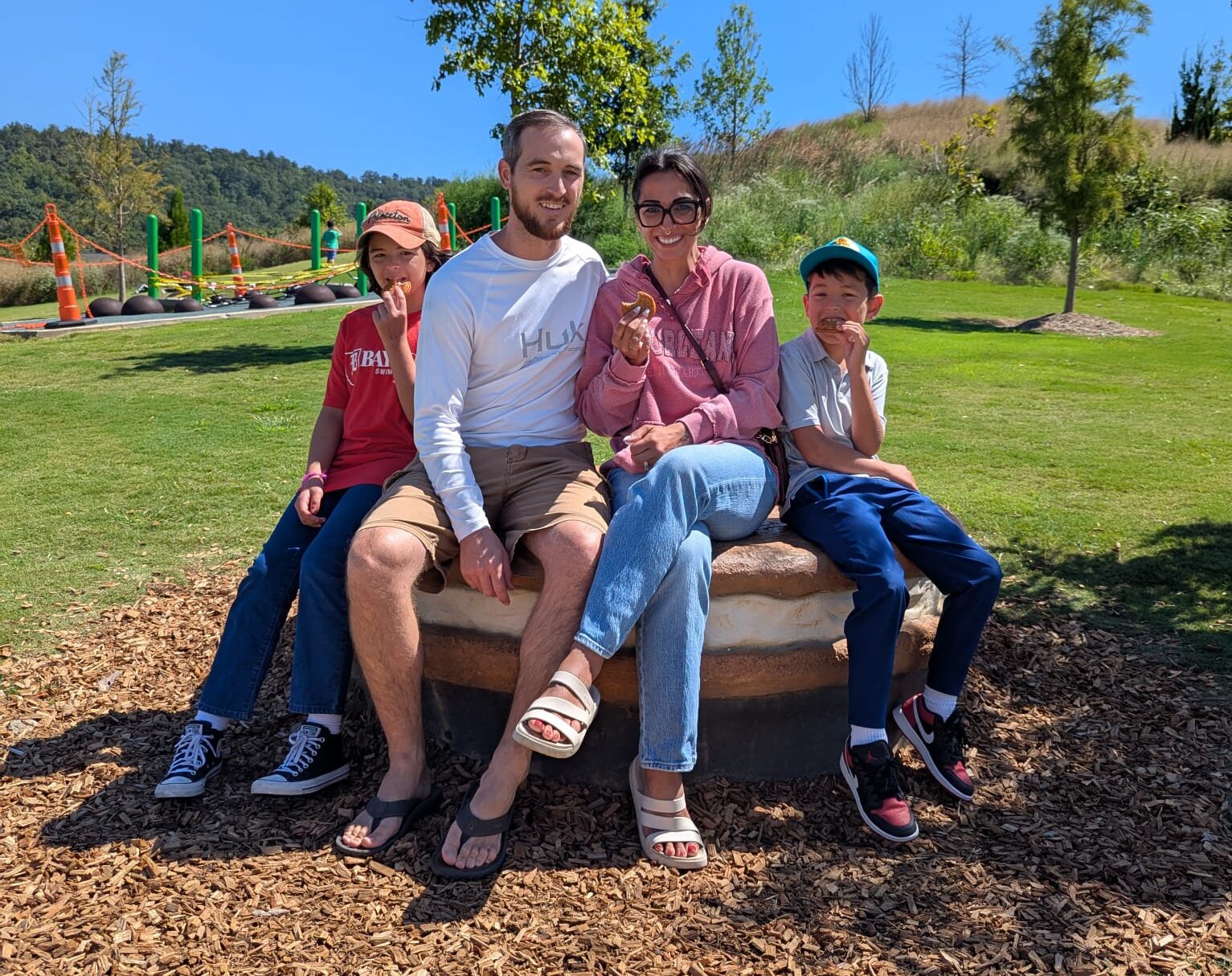
 Three years ago, I wrote about how I was teaching my kids body autonomy. It ruffled some feathers, but it was all true and needed information. The emails, texts, and DMs proved it. And now that my kids are older (11 and nine), they too are proving it every single day.
My son HATES being tickled. He’ll laugh in reflex at first, but it quickly turns to distress and then tears. Adults usually assume kids love to be tickled, but not all of them do. And since we’ve given Joseph the power (and the tools) to advocate for himself, he now stops them mid-tickle, explains the problem, and sets clear expectations that they need to ask first (though the answer will always be no).
A nine-year-old shouldn’t have to teach grown adults about consent, but here we are.
When kids are little, body autonomy means they don’t have to hug Grandpa or kiss Aunt B. Now? It’s quickly getting infinitely more complex. Video calls while walking around the house have led to conversations about videoing common living spaces without the consent of others. We discussed how to assess it. We practice what enthusiastic consent actually looks like, and that “yes” one time doesn’t (and shouldn’t) mean “yes” forever.
We’ve also had the hard conversations around the social fallout of holding boundaries, because the truth is: even when you’re doing the right thing, there are natural consequences. I would never talk someone out of holding boundaries, but I’m preparing my kids for the reality that standing up for yourself isn’t always easy or popular, but it is the right thing to do.
Talk About It
One huge thing I do is point out consent violations in movies. Every. Single. Time. With my 11-year-old, I’ll pause and ask, “What do you think is wrong with what they just did?” With my nine-year-old, I just call it out: “See how he just leaned over and she pulled away, but he kissed her anyways? That’s not okay.” Naming things in everyday life teaches them how to see these rules played out in real life.
Since Jasmine is getting older, we have moved some discussions to puberty and how that may make others more aware of her body. We discuss what pressure looks like and what explicit consent looks like. This may not seem like a comfortable dinner table conversation, but I’d rather explain before an incident that a “frozen” response doesn’t negate that a crime occurred.
What Comes After
What isn’t discussed as much is that sometimes, despite all your preparation, violations still happen. And we need to talk about what comes next.
First: validate their feelings. Every time. Even if it seems small to you, actually – especially – if it seems small to you.
Second: help them walk through the emotional aftermath. There’s often shame around being “so prepared” and then freezing or fawning in the moment. I make sure my kids know that fight-or-flight responses are biological, not choices. Freezing doesn’t mean they allowed the indiscretion or abuse. Ever.
Third: if a crime has occurred, support them in reporting it. In Tennessee, everyone is a mandatory reporter. That means you have a duty to report any suspected abuse. There are a couple good resources: CAC (Child Advocacy Center) in Chattanooga and the Hamilton County reporting hotline (423-209-7000). And I urge parents to understand the Title IX laws at school.
Fourth: I give them prep phrases to attempt to override that fight-or-flight response. Simple scripts like “Stop, I don’t like that” or “I need to leave now” or even just “No” repeated firmly. Because in the moment, complex thinking shuts down. Kids are not born with the words to say these things. They need them modeled and repeated to feel safe enough to use them.

It’s Important
People may think I’m overreacting about some of this, but the nine-year-old who learns to say “stop” and be heard becomes the teenager who can identify sexual pressure and say “no”. The 11-year-old who practices consent with friends? That’s the young adult who understands power dynamics and will be less likely to fall prey to them.